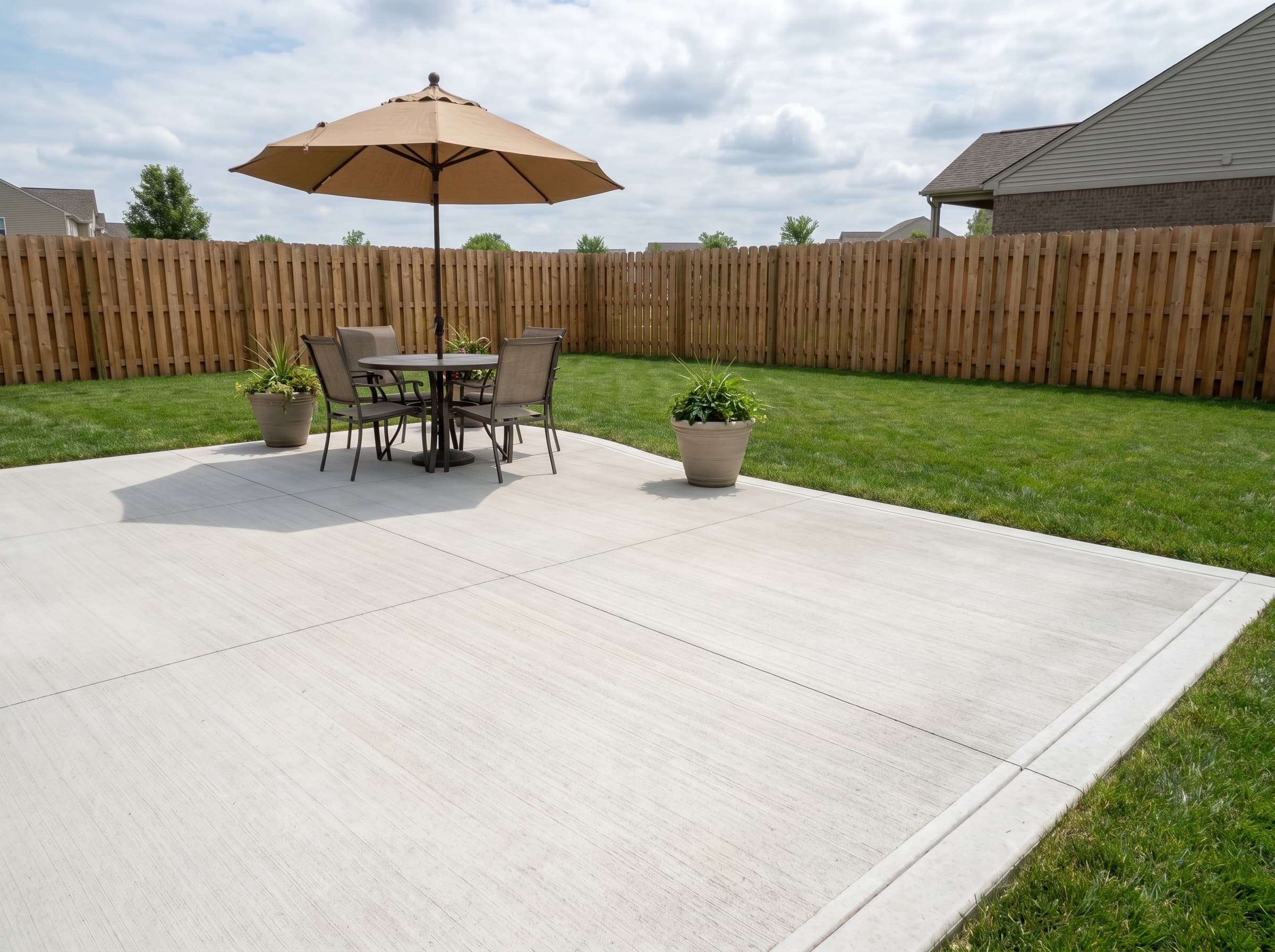
You spent good money on your concrete. Here's how to make sure it lasts the full 30+ years it's designed for — without spending a fortune on upkeep.
The good news is that concrete is one of the lowest-maintenance surfaces you can own. But "low maintenance" doesn't mean "no maintenance," especially in Columbus where our weather cycles put outdoor surfaces through the wringer.
The Basics: What Every Columbus Homeowner Should Do
Keep It Clean
This is the simplest and most effective thing you can do. Dirt, leaves, and organic debris hold moisture against the surface, which accelerates wear — especially through our freeze-thaw cycles.
- Sweep regularly to remove leaves and debris, particularly in fall
- Pressure wash once a year in spring to clear winter grime, salt residue, and any mildew that developed over the wet months
- Clean up oil and stains promptly — oil penetrates concrete quickly and gets harder to remove the longer it sits. Dish soap and a stiff brush work for fresh spills. For set-in stains, use a concrete degreaser from any hardware store
Seal It (But Not Too Often)
Sealing creates a protective barrier against moisture, stains, and freeze-thaw damage. It's the single best thing you can do to extend your concrete's life.
How often: Every 3–5 years for regular concrete, every 2–3 years for stamped or decorative concrete.
How to tell it needs resealing: Pour a small amount of water on the surface. If it beads up, the seal is still good. If it darkens and absorbs quickly, it's time to reseal.
What to use: Acrylic sealers are the most common for residential concrete. They're easy to apply, affordable, and provide good protection. For high-traffic areas like driveways, a penetrating silane/siloxane sealer offers deeper protection.
DIY or professional? Sealing is a reasonable DIY project if you're comfortable with it. A good concrete sealer costs $30–60 per gallon and covers about 200–300 square feet. If you'd rather have it done right, most concrete contractors (including us) offer sealing services.
Fix Cracks Early
Small cracks are normal — concrete expands and contracts with temperature changes, and properly placed control joints are designed to direct this movement. But when cracks appear outside of control joints, address them quickly.
- Hairline cracks (less than 1/4 inch): Fill with a flexible concrete caulk. This takes 10 minutes and costs under $10
- Wider cracks (1/4 to 1/2 inch): Use a concrete crack filler, which comes in squeeze bottles or caulk tubes. Clean out loose material first
- Large cracks or settling: This usually indicates a sub-base problem. Call a professional — patching a structural issue with filler is like putting a bandaid on a broken bone
The reason to fix cracks fast: water gets in, freezes, expands the crack, and the cycle accelerates. A $10 repair this fall prevents a $500 problem next spring.
Seasonal Maintenance for Columbus
Spring (March–May)
- Inspect for any winter damage — new cracks, spalling, or heaving
- Pressure wash to remove salt residue and winter grime
- Fill any cracks that appeared over the winter
- Schedule sealing if it's been 3+ years
Summer (June–August)
- This is the best time to seal concrete — warm, dry conditions help sealers cure properly
- Remove any weeds growing in expansion joints
- Address oil stains from summer projects
Fall (September–November)
- Clear leaves regularly — wet leaves stain concrete and hold moisture
- Do a final crack inspection before winter
- Make sure drainage is flowing away from concrete surfaces (clear gutters and downspouts)
Winter (December–February)
- Use sand or kitty litter for traction instead of rock salt. Salt (sodium chloride) is the enemy of concrete surfaces. It accelerates spalling and surface damage, especially on newer concrete
- If you must use a chemical deicer, use calcium magnesium acetate (CMA) — it's gentler on concrete than salt
- Never use ammonium nitrate or ammonium sulfate deicers — these attack concrete chemically
- Shovel snow promptly to prevent ice buildup. Use a plastic shovel to avoid scratching the surface
Common Mistakes to Avoid
Using salt on concrete less than one year old. New concrete is especially vulnerable to salt damage. Use only sand for traction during the first winter.
Power washing with too much pressure. Keep your pressure washer under 3,000 PSI and use a wide fan tip (25° or 40°). Too much pressure can etch the surface and remove the top layer of cement paste.
Ignoring drainage. Water pooling against or on your concrete is the number one cause of premature damage. Make sure soil hasn't built up against slab edges and that water flows away from your concrete.
Parking heavy equipment on residential concrete. Standard residential driveways are 4 inches thick. Dumpsters, loaded trailers, and heavy machinery can crack thinner slabs. If you need to park something heavy, put down plywood sheets to distribute the weight.
When to Call a Professional
Most concrete maintenance is straightforward, but some situations need professional attention:
- Multiple cracks appearing in a pattern — Could indicate a structural/base issue
- Sections sinking or heaving — Sub-base has failed and needs rebuilding
- Widespread surface flaking (spalling) — May need resurfacing or replacement depending on severity
- Concrete is more than 30 years old with persistent issues — Replacement may be more cost-effective than ongoing repairs
The Maintenance Bottom Line
Concrete is remarkably low-maintenance compared to almost any other outdoor surface material. A few hours a year of basic care — cleaning, occasional sealing, and prompt crack repair — is all it takes to get decades of reliable service.
The most important thing? Don't ignore small problems. Every major concrete issue started as a minor one that could have been fixed cheaply.
Have questions about your concrete? Reach out for a free consultation — we're happy to take a look and give you honest advice, whether you need us or not.